
By…Laiba Yousaf
Climate change has emerged as one of the most significant non-traditional security challenges for Pakistan in recent decades. Unlike conventional security threats, which revolve around military and political conflicts, non-traditional security threats include environmental degradation, climate-induced disasters, water scarcity, epidemics, and food insecurity. Pakistan, being one of the most climate-vulnerable countries in the world, has witnessed severe consequences of rising temperatures, unpredictable monsoon patterns, and melting glaciers. Floods, droughts, heat waves, and intense rainfall events have repeatedly challenged the country’s economy, development, and national security landscape.
Over the past few years, Pakistan has faced an alarming rise in the frequency and intensity of climate-related disasters. These include devastating floods, prolonged droughts, glacier lake outburst floods (GLOFs), extreme heat waves, and storms. Scientific evidence shows that these events are worsening due to global warming, which increases atmospheric moisture, destabilizes seasonal patterns, and accelerates glacial melt. As a result, climate change now directly threatens the safety, well-being, and livelihoods of millions of Pakistanis.
According to environmental experts, the increase in temperature has intensified heat waves and accelerated melting in the northern glaciers. Changes in monsoon timings have contributed to unpredictable rainfall patterns, often resulting in either drought-like conditions or excessive downpours within a short period. These climatic disruptions create fertile ground for disasters, and in Pakistan’s case, floods have become the most destructive manifestation of climate change.
Ayu Sharifi, in an interview with Al Jazeera, highlights that “While climate change plays a critical role in intensifying flooding events in Pakistan, other factors such as urbanization, deforestation, inadequate infrastructure, and poor river management also contribute significantly.” This reflects the multidimensional nature of Pakistan’s vulnerability. Climate change may act as a trigger, but poor environmental management greatly amplifies the scale of destruction.
Historical Context: Major Floods from 2010 to 2022:
Historically, Pakistan has suffered some of the most catastrophic floods in the world, but the floods occurring between 2010 and 2022 were unprecedented. According to Britannica (2010), “Flooding owing to the changing pattern of rainfall from 2010 to 2022 caused massive humanitarian loss and damage on a broad scale.” Millions were affected, thousands lost their homes, and infrastructure collapsed across various provinces. These floods forced large-scale migration from rural to urban areas, placing additional pressure on already strained cities.
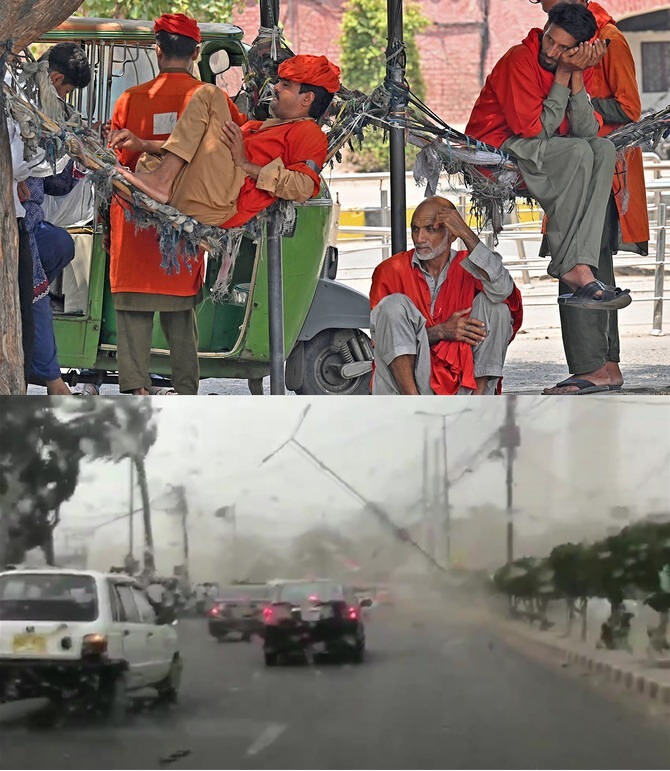
The recent floods show how climate change continues to intensify disasters. Rising global temperatures allow the atmosphere to hold more moisture, leading to heavier rainfall and powerful flood events. In northern regions such as Gilgit-Baltistan and Khyber Pakhtunkhwa (KPK), glacier lake outburst floods have become more common. Meanwhile, major cities including Lahore, Karachi, and parts of southern Punjab recorded unprecedented rainfall in June 2025.
Entire villages in KPK were wiped away by powerful floodwaters. More than 700 people lost their lives during this year’s monsoon season alone. The Buner district in KPK suffered some of the worst consequences, with over 200 fatalities, thousands of homes destroyed, and infrastructure damaged. Families were displaced, losing their homes, crops, and livelihoods.
Impacts on Food Security, Economy, and Human Safety:
The economic impacts of climate change and floods have been devastating. Pakistan faces severe threats to food security, economic stability, and human safety. Floods in recent years damaged rural and urban industrial centers, resulting in enormous financial losses. Government estimates indicate that more than 30 billion dollars were spent on relief, reconstruction, and rehabilitation efforts after repeated flood disasters.
Pakistan’s agriculture backbone was hit hardest. Around 50% of rice crops and 60% of cotton fields were destroyed in recent floods. This collapse in agricultural output triggered food shortages, rising inflation, unemployment, and growing poverty. Climate change caused disruptions in supply chains, damaged markets, and slowed economic growth.
Research further shows that many regions of Pakistan lack proper flood management systems, early warning mechanisms, and trained disaster response units. As a result, communities suffer repeated health crises, epidemics, water contamination, and long-term displacement.
Climate change also has political and military implications. According to the UN Security Council (2021), “The disruption caused by natural disasters provides a breeding ground for insurgent groups to exploit the vulnerabilities of victims.” In Pakistan’s case, this is concerning. During major disasters, when the government and army focus on rescue and relief operations, groups such as the Tehreek-e-Taliban Pakistan (TTP) often try to exploit governance gaps, weaken public trust, and increase militant activities.
Importantly, climate change is not just a natural phenomenon. Human activities such as industrial emissions, deforestation, unplanned urbanization, and reliance on fossil fuels intensify environmental degradation. These factors make Pakistan even more vulnerable before, during, and after disasters.
Pakistan’s Need for International Cooperation:
Climate change now stands as one of the most serious threats to Pakistan’s national security. It affects every sector: people’s lives, infrastructure, economy, agriculture, water availability, and internal stability. Pakistan, being resource-constrained, cannot handle this challenge alone. Therefore, it seeks support from international bodies such as the United Nations and the Conference of Parties (COP). Temporary assistance or IMF loans cannot provide long-term protection.
To strengthen resilience, Pakistan must adopt sustainable strategies. Shifting to renewable energy like solar, wind, and hydropower can reduce emissions and improve energy security. Limiting coal imports, investing in modern farming techniques, and improving water management systems are essential for protecting agriculture. Strengthening disaster management authorities, enhancing early warning systems, and training local governments can significantly reduce human loss.
Public awareness campaigns, community preparedness, and climate resilient infrastructure are also critical for long-term safety.
Conclusion:
Climate change is not just an environmental issue but it is a comprehensive national security threat for Pakistan. Without urgent adaptation and mitigation measures, the country will continue experiencing severe floods and climate related disasters. A coordinated national effort, supported by strong international cooperation, is essential to safeguard Pakistan’s future in the face of this growing threat.
References
- Journal of developmental and social sciences.
www.jdss.org.pk
- National school of public policy .
https.//nspp.gov.pk
- Research gate
https.//www.researchgate.net
- Al-jazeera
https://www.aljazeera.com
- Springer
https://link.springer.com